The Listing Presentation That Wins Sellers: A Marketing Plan Template
Updated September 27, 2026 · 5 min read
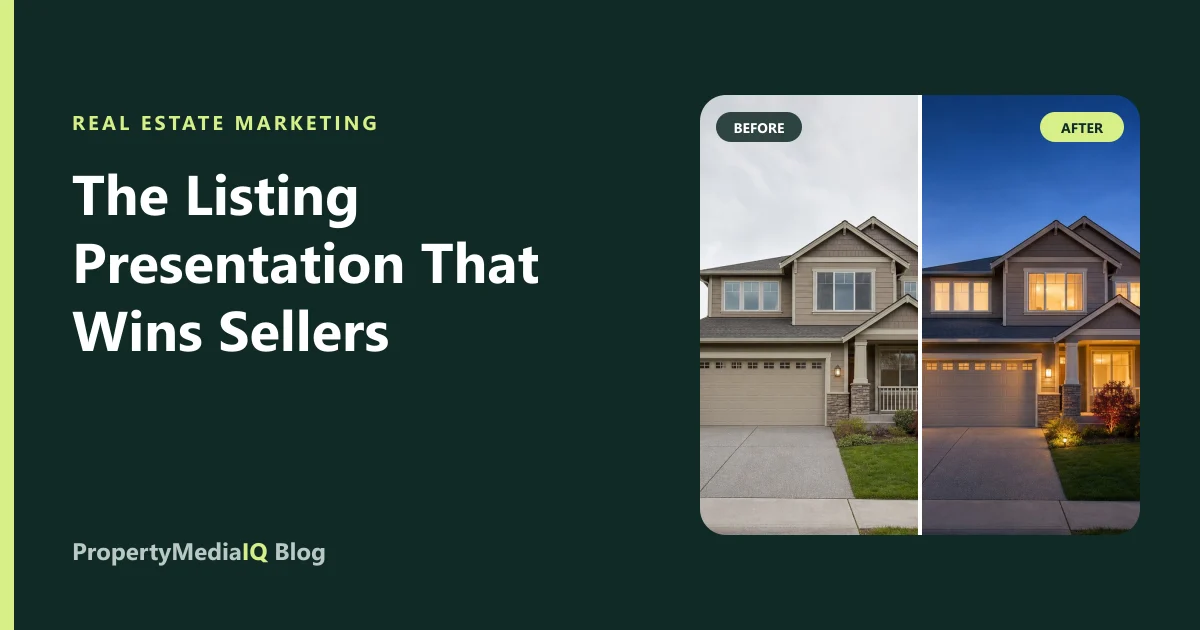
Sellers rarely choose an agent on commission alone. They choose the agent they believe will sell their home for the best price with the least stress. The most convincing way to show that is a concrete, visible marketing plan — with examples — rather than a slideshow about you.
This guide gives you a listing presentation structure, the marketing plan sellers want to see, and how to prove it with real examples.
The structure
- Their goals — timeline, price expectations, concerns, what "success" looks like.
- The market — recent comparable sales, active competition, days on market.
- Pricing strategy — a range, the reasoning, and the risks of over-pricing.
- Preparation — what to fix, clean, remove or stage.
- The marketing plan — photos, staging, video, copy, launch, open houses.
- Buyer handling — how enquiries are answered and qualified.
- Communication — what you'll report, and how often.
- Next steps — timeline to go live.
Keep sections 1–3 as a conversation. Make section 5 visual.
Start with their goals
Ask before you present:
- When do you need to move, and is that date fixed?
- What price would make this a success for you? What's the lowest you'd accept?
- What worries you most about selling?
- Have you sold before? What went well or badly?
Listen for motivation and timeline — the same signals that matter with buyers. A short seller questionnaire before the appointment makes this faster; see qualifying seller leads.
The marketing plan sellers want to see
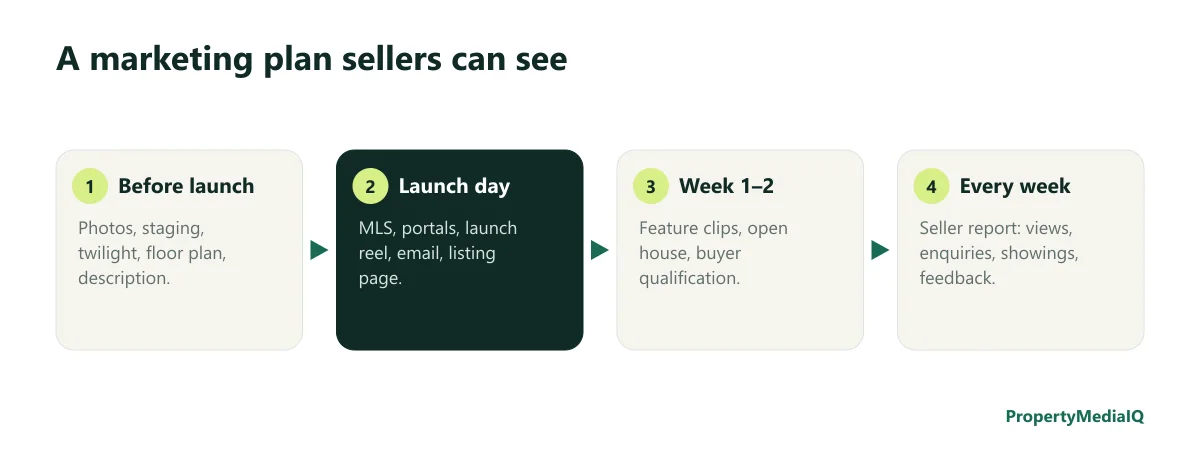
Before launch
- Professional photography, with a photo checklist.
- Virtual staging for vacant rooms; decluttering or furniture removal for occupied ones.
- Twilight conversion of the hero exterior.
- Floor plan.
- Listing description and social captions.
Launch day
- MLS and portals live with the finished gallery.
- Launch reel on social from AI video clips.
- Email to your database and agent network.
- Listing page with photos, video and floor plan.
Weeks one and two
- Feature clips and before/after posts.
- Open house with digital sign-in.
- Every enquiry receives an answer and a short buyer questionnaire.
Every week
- Seller report: views, saves, enquiries, showings, feedback, and recommended adjustments.
Use the 7-day listing launch plan as your detailed schedule.
Show, don't tell: bring examples
The strongest moment in a listing presentation is when the seller sees their own home marketed well. Before the appointment:
- Take or obtain two or three photos of the home (with permission).
- Stage an empty or dated room, or convert the exterior to twilight.
- Turn the best image into an 8-second video clip.
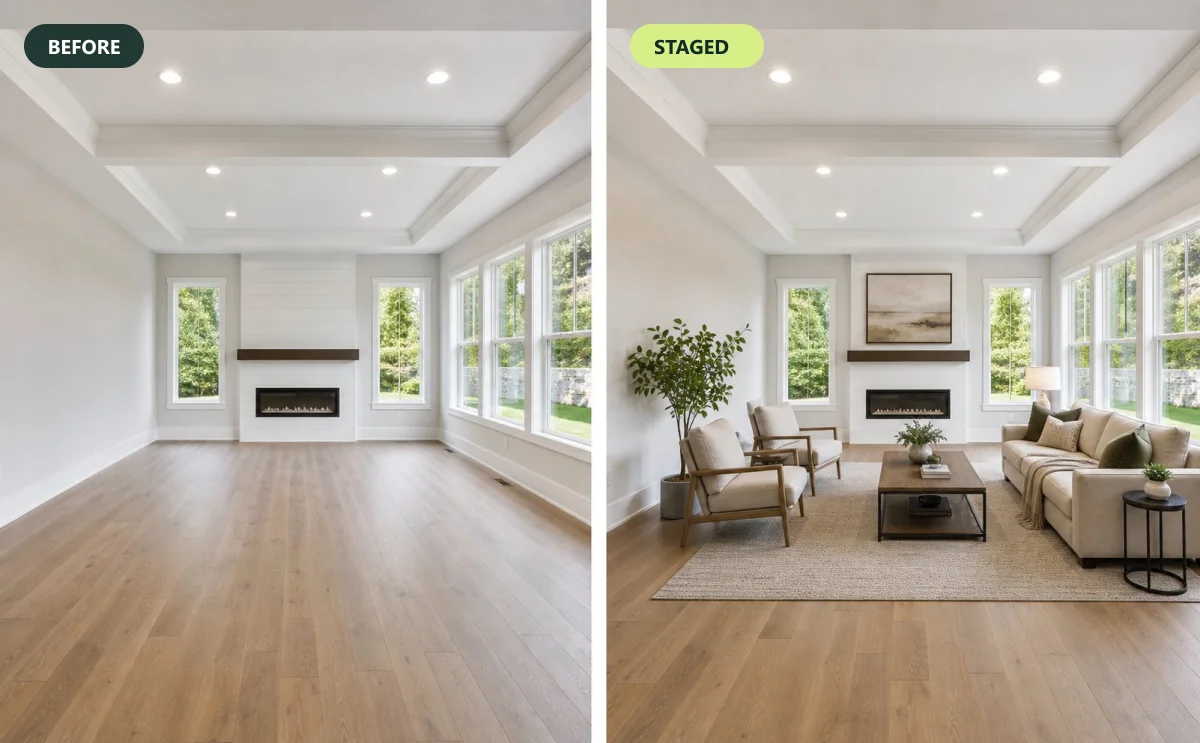
With Property Media a staged photo costs $5 and a twilight $2; a property video clip is $19. For about $30 you arrive with a preview of their listing — clearly labeled as an example — that no competing agent has.
Pricing: be clear about the range and the risk
- Show comparable sales, active competition and expired listings.
- Present a range and your recommended list price, with reasoning.
- Explain what happens when homes are over-priced: fewer showings, longer days on market, price reductions.
- Tie presentation to price: finished photos and video help a home compete at the top of its range.
Buyer handling: the part most presentations skip
Sellers worry about wasted showings and unqualified buyers. Explain how you'll handle enquiries:
- every enquiry gets a fast, useful reply;
- buyers complete a short questionnaire — timeline, financing, budget range — before private showings;
- ready buyers are prioritized; early buyers are nurtured;
- you'll share enquiry quality in your weekly report.
Buyer Intelligence gives you readiness scores and call briefs for every buyer lead, so you can say this with confidence. See how to qualify buyer leads.
Communication: promise a rhythm and keep it
| When | What the seller receives |
|---|---|
| Launch day | Links to the listing, video and social posts |
| Weekly | Views, saves, enquiries, showings, feedback |
| After each open house | Attendance and feedback summary |
| After 14 days | Market response review and recommendations |
A one-page presentation template
- Your goals (their words).
- Market snapshot (3 comps, 3 competitors).
- Recommended price range.
- Preparation list.
- Marketing plan (the four stages above, with their home's examples).
- Buyer qualification process.
- Weekly reporting.
- Timeline to launch.
After the presentation
- Send a written summary within 24 hours, including the example images.
- Follow up on questions within the timeline they gave you.
- If you win the listing, the marketing work you prepared is already started.
Handling common seller objections
"Another agent will list it for less commission." Compare net outcomes, not fees: explain how presentation, pricing strategy and buyer qualification affect sale price and time on market, and show the marketing plan they're paying for.
"We don't want to spend money on staging." Physical staging can cost thousands; virtual staging of the key rooms costs a few dollars per photo and is included in your plan.
"Our home shows fine as it is." Show the before/after example of their own room and let them decide.
"We want to list higher and come down if needed." Walk through what happens to over-priced listings: fewer showings in the critical first weeks, then price cuts that signal weakness.
"We're not sure about AI-edited photos." Explain your disclosure practice: nothing permanent changes, originals are kept, and edited images are labeled.
A pre-appointment checklist
- Seller questionnaire completed (goals, timeline, price expectations).
- Comparable sales and active competition prepared.
- Two or three example images of their home prepared and labeled.
- A marketing plan page with dates.
- A weekly report sample.
- A listing agreement and next-step timeline ready.
Frequently asked questions
What should a listing presentation include? The seller's goals, market data, pricing strategy, preparation, a visible marketing plan, buyer handling and communication.
How long should it be? Around 45–60 minutes including conversation.
What wins listings? Understanding the seller's goals and showing a concrete plan — ideally with examples of their own home marketed well.
Bring a preview of their listing to your next appointment
Prepare listings and qualify buyers in one workspace.
Virtual staging, property video, and buyer intelligence — use one product or connect all three.